India Has the Talent. What It Needs Is Access: Unstop’s Role in Opening Doors Like SEVA FIRST
New Delhi [India], November 3: Ask a placement officer about the students they remember, and the answer is rarely about marks. It is about the student who built something, entered something, or solved something before anyone asked them to. The harder question is how many such students never get the chance, because the opportunity never reaches them.
That gap between ambition and access sits at the centre of Unstop’s work. A recent government-backed innovation challenge offers a clear view of how it plays out.
A Challenge Built Around Real Problems
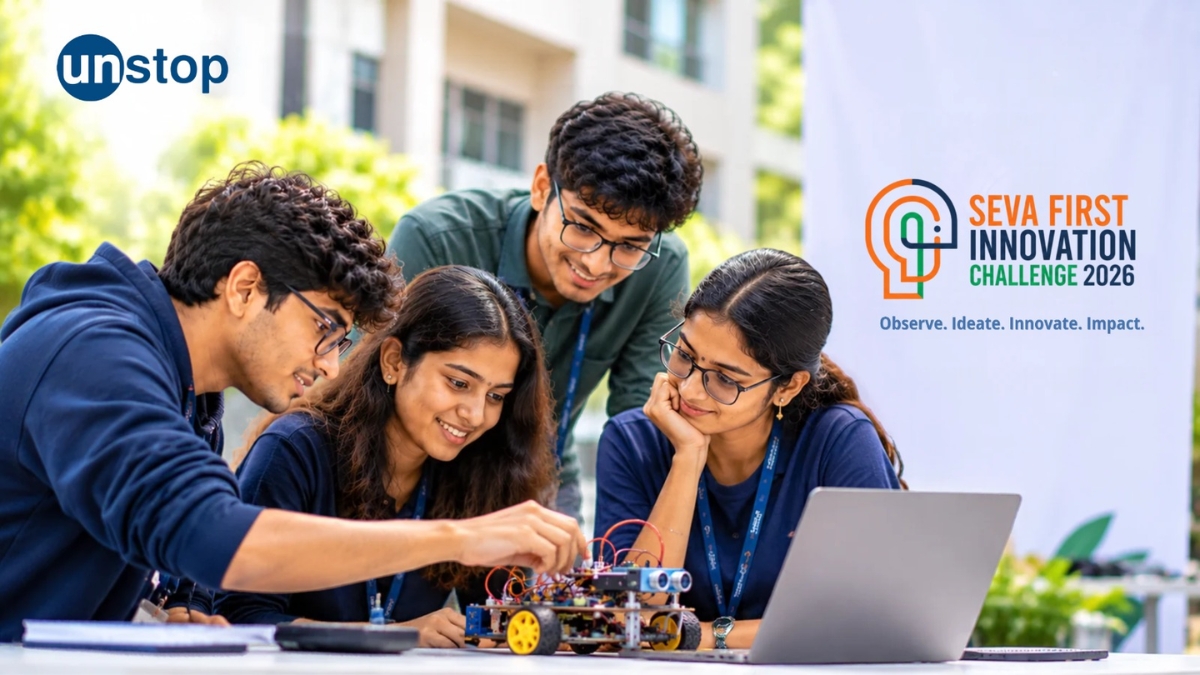
SEVA FIRST – Rashtriya Youth Innovation Challenge 2026 is part of the wider Seva First Innovation Challenge, a national initiative that asks young people to identify real problems in their communities and develop solutions that are affordable, scalable and implementable. Delhi’s higher education minister launched the programme at Delhi Technological University on 19 September, with DTU anchoring the northern region. Mentorship and government support are built into the structure.
What makes it instructive is the format. The brief is not an exam question. Students are asked to look at the world around them, name a problem and propose something that could work.
The opportunity was first listed on Unstop, which is now directing its student community to the official government portal. While this may seem like a small step, it highlights Unstop’s role in making such initiatives more accessible. The platform is not the owner of the opportunity; its role is to bring it to the attention of students who might otherwise never come across it.
Why Visibility Matters
India’s hiring ecosystem is still working out what counts as evidence of ability. HirePro’s State of College Hiring in India 2026 found that 96 per cent of colleges believe employers have embraced skills-first hiring, while only 21 per cent of corporates say they have fully made that shift. The same report found that 68 per cent of students consider themselves job-ready from day one, against 9 per cent of employers who agree.
Students, colleges and employers, in other words, are reading the same market differently. Where shared evidence of capability is thin, familiar signals fill the gap: the degree, the college name, the network. Those signals favour students who already have access to the right campus and the right introductions.
A challenge entry offers a different kind of evidence. A student who identifies a problem, develops a solution and defends it before evaluators demonstrates initiative, critical thinking and the ability to apply knowledge beyond the classroom. While it may not replace conventional hiring assessments, it adds another dimension to understanding a student’s potential.
Where Unstop Fits
Founded by Ankit Aggarwal in 2019, Unstop describes itself as India’s largest early-talent community engagement and hiring platform. The company says it connects more than 32 million students and early professionals, from over 20,000 colleges, with 35,000-plus employers. It has powered programmes such as the Adobe Hackathon and reports more than 200,000 engagements and 25 million assessments completed.
Aggarwal, who worked at Sapient, Deloitte and Teach For India before turning entrepreneur, argues that the student journey is changing. The old sequence of education, graduation and job is giving way to one in which students build experiences and proof of skills first, and opportunities follow. His conclusion is a simple one: young talent should not have to wait until graduation to show what it can do.
For that to be more than a slogan, three things have to hold. An opportunity has to be discoverable, so a student in a smaller town hears about it at all. It has to be accessible, so a student from a Tier 2 college can enter on the same terms as one from a leading campus. And it has to be actionable, with a clear path from entry to outcome. The question is no longer whether India has enough talent. It is whether we are creating enough platforms for that talent to be seen, tested and recognised.
Unstop isn’t just creating talent. It is helping talent find opportunities, get discovered and prove what it can do.
A Signal, Not a Guarantee
None of this replaces rigorous evaluation. A challenge entry is evidence, not a promise, and employers will keep weighing it alongside other factors. The HirePro numbers are a reminder that skills-first hiring remains unfinished work.
But the direction is clear enough. As more of India’s opportunities, from corporate programmes to government initiatives, move into open formats, the question is who gets to see them.
India does not need to manufacture ambition. It already has plenty. The task is to widen the routes by which that ambition meets a real problem, a real audience and a fair chance to be judged on the work. A country’s talent is only as visible as the platforms that carry it.
If you object to the content of this press release, please notify us at [email protected]. We will respond and rectify the situation within 24 hours.